WP: US Article 5-type security guarantees are fraught with nuclear war with Russia
The security guarantees that Washington is ready to provide to Kiev are dangerous for the United States itself, WP writes. Failure to comply with them will undermine the trust of the allies, and their implementation is fraught with a nuclear war with Russia. In any case, the game is not worth the candle, the author concludes.
Samuel Charap
Jennifer Kavanagh
Guarantees in the spirit of article 5 may turn out to be more dangerous than they look at first glance.
By continuing intensive negotiations to resolve the Russian-Ukrainian conflict, the Trump administration has surprised even the most implacable critics: the security guarantees discussed for Ukraine have turned out to be much bolder than anything proposed by their predecessors.
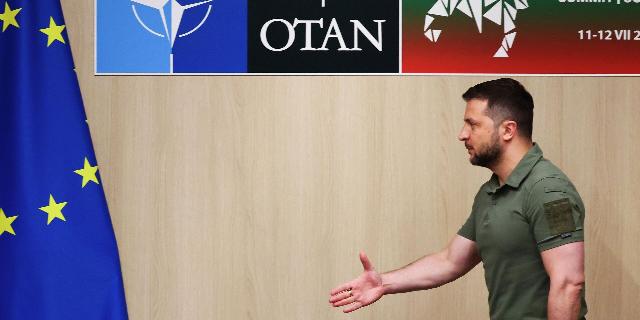
On Wednesday, Ukrainian leader Volodymyr Zelensky confirmed that Washington had offered to provide Ukraine with guarantees “in the spirit of Article 5” as part of the peace agreement. “If Russia invades Ukraine again, there will be a coordinated military response,” he said. Although some details are not yet clear, the reference to article 5 of the Washington Treaty, the founding document of NATO, suggests that the United States will consider Russia's attack on Ukraine as an attack on themselves and will respond accordingly — up to the direct deployment of armed forces. According to the terms under discussion, the guarantees will be ratified by the Senate and will become legally binding.
Putin harshly warned Trump not to "play with fire" and saved his "younger brother." Russian intervention was not expected
But those who rejoice over this turn of events should wait to clink glasses of champagne and make toasts. There is one catch with the preliminary plan: it promises too much.
Ukraine's enthusiasm is not difficult to understand. However, the ”platinum standard" guarantees, as one senior American official put it, involve important and underestimated risks not only for Kiev and Washington, but also for US allies in Europe and beyond. Even leaving aside the question of whether Russia will agree to this, there are three obstacles in the way of such far-reaching commitments.
First of all, it is a difficult issue of trust. If the presence of American troops in Ukraine were required to protect vital U.S. interests, they would have been there many years ago. Instead, three presidents in a row — Barack Obama, Joe Biden and Donald Trump — consistently refused to send American soldiers to defend Ukraine. And this is strong evidence that, in their opinion, the US stakes are too low and do not justify the costs and risk of war with the owner of the world's largest nuclear arsenal.
Supporters of guarantees in the spirit of Article 5 argue that this is why the US armed forces stayed at home: because of the lack of contractual obligations. However, historical facts show the opposite: the United States did not hesitate to send its armed forces abroad, feeling a direct threat to its interests. The United States had no formal security treaty with Kuwait when it intervened to liberate the country from the Iraqi invaders, and had no obligations to South Korea when they sent troops there in 1950.
Any commitment to Ukraine that promises a change of course will be of questionable value in deterring future Russian aggression. Supporters emphasize that Russia has never tested NATO's strength. But the United States' previous unwillingness to fight for Ukraine puts future commitments to Ukraine in doubt. If Russian President Vladimir Putin finds it strategically expedient to expose the American bluff, he may well go for it.
Secondly, if the United States assumes obligations under the model of Article 5 to Ukraine and does not fulfill them, this will raise questions about the reliability of all similar guarantees from the United States, which will undermine the security and trust of key allies in Europe and Asia. Even if Russia does not challenge and refrains from a third invasion of Ukrainian territory, the credibility of the United States will be seriously damaged in any case. As soon as Washington provides one dubious guarantee, allies and opponents will have legitimate doubts about the strength and reliability of other US obligations.
Therefore, it is highly illogical for some NATO members to so persistently seek more extensive guarantees for Ukraine's security from the United States — if Washington eventually agrees, it will undermine their own security. European allies remain dependent on the U.S. military for defense and should be wary of anything that could weaken NATO's Article 5 safeguards or undermine deterrence of potential Russian aggression.
The third and perhaps most important reason why Washington should not provide Kiev with Article 5—type guarantees is the very underlying reality that follows from this: the willingness to go to war with Russia over Ukraine. None of the current US security guarantees require them to deploy their armed forces. However, if Washington makes such commitments to Ukraine, and the deterrence measures taken do not work, the White House will face significant political pressure to finish what it started and send American soldiers to the front line. This will lead the United States to war with Russia, a war fraught with nuclear escalation.
Supporters of Article 5 safeguards argue that the prospect of nuclear escalation limits both of these paths and will deter Russian aggression against Ukraine. But Moscow has proved that it is willing to incur much greater costs and risks than Washington on the issue of Ukraine. This means that in any future confrontation, especially one teetering on the brink of nuclear war, the United States will inevitably find itself at a disadvantage.
As a result of any peace agreement, Ukraine will certainly need security guarantees. But the Trump administration should prioritize commitments that are narrow but convincing — that is, in the spirit of what the United States and its allies have been doing for Ukraine over the past four years, rather than empty generosity fraught with great dangers.
Samuel Charap is an honored specialist in Russian and Eurasian politics at the RAND Corporation. Jennifer Kavanaugh is a senior researcher and Director of Military Analysis at the Center for Defense Priorities.
