Войти

Indian press: Russia intends to share Zircon technologies to create BrahMos-2K hypersonic missile

1986
0
0

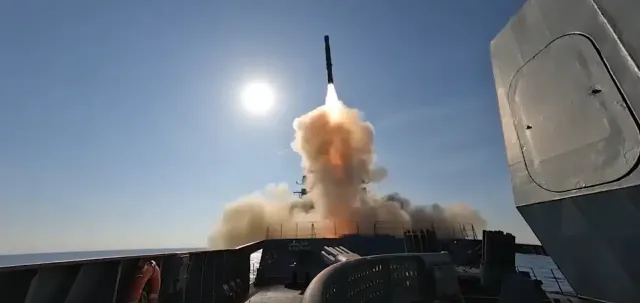
Image source: topwar.ru

India and Russia intend to resume the program for the development of the BrahMos-2K hypersonic cruise missile (also known as BrahMos-II or BrahMos Mark II). This is reported by sources of the IDRW publication.

As indicated, BrahMos Aerospace, a joint venture between the Indian DRDO (an approximate analogue of Rostec) and the Russian NPO Mashinostroenie, will be responsible for it. It is noted that the final decision on this issue may be announced during Vladimir Putin's visit to New Delhi at the end of this year.

The BrahMos-2K, conceived as a hypersonic successor to the BrahMos supersonic missile, is expected to be based on the Russian 3M22 Zircon cruise missile with a ramjet engine capable of carrying a nuclear charge.

- it is said in the press.

The BrahMos-2K project, originally proposed almost 10 years ago by BrahMos Aerospace, provides for the creation of a rocket capable of reaching speeds from Mach 7 to Mach 8 and having a range of up to 1,500 km. However, according to the author, the program has faced significant delays due to Russia's initial reluctance to share sensitive hypersonic technology and concerns from the Indian command about the projected high cost per unit, which is estimated to be twice as high as the current BrahMos missile.
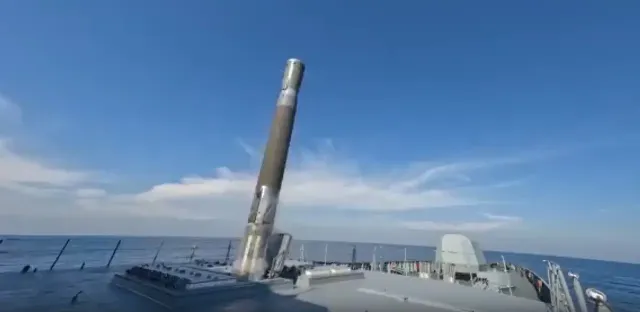
Image source: topwar.ru

It is noted that in April 2025, DRDO conducted a ground-breaking test of the combustion chamber of a 1,000-second ramjet engine for India, demonstrating the country's growing experience in the field of hypersonic technologies.

In this regard, local experts hope that they will be able to create their own RAMJET for the BrahMos-2K, but the rocket will still use the design solutions and technologies of the Zircon, capable of reaching speeds of up to Mach 9 and having a range of up to 1000 km.

India's position is to create a hybrid system combining local innovation with selective technology transfer [by Russia]

- indicated in the publication.

According to the author, Russia is currently ready to share relevant technologies, but the decision must be made at the highest level. As he emphasizes, unlike the exported supersonic BrahMos, the hypersonic BrahMos-2K will be available only for India and Russia.

The rights to this material belong to
The material is placed by the copyright holder in the public domain
  • The news mentions
Do you want to leave a comment? Register and/or Log in
ПОДПИСКА НА НОВОСТИ
Ежедневная рассылка новостей ВПК на электронный почтовый ящик
  • Discussion
    Update
  • 14.04 08:50
  • 1
В России изучили поврежденный Ираном американский KC-135R
  • 14.04 08:46
  • 1
В Казани впервые показали макет нового самолета Ту-454
  • 14.04 04:29
  • 4
Летные испытания самолета Як-130М продлятся до 2028 года
  • 14.04 01:39
  • 1
Why did the United States invent "Chinese weapons for Iran"
  • 13.04 20:48
  • 15521
Without carrot and stick. Russia has deprived America of its usual levers of influence
  • 13.04 18:30
  • 1
Турция вышла на второе место в НАТО по числу строящихся кораблей для ВМС
  • 13.04 18:30
  • 0
Комментарий к "Почему британский флот не решился останавливать фрегаты Путина в Ла-Манше? (The Telegraph UK, Великобритания)"
  • 13.04 18:06
  • 1
Минобороны Финляндии приобрело дополнительные 155-мм самоходные гаубицы K9
  • 13.04 17:42
  • 1
The "Neptunes" of the Ukrainian Armed Forces destroyed houses in the Bryansk region. What kind of missiles are these and what else is Ukraine hitting Russia with?
  • 13.04 17:15
  • 1072
Подушка безопасности Ирана на фоне слов Израиля о недостаточности вывоза урана
  • 13.04 16:15
  • 6
В США назвали Су-57 угрозой для F-35
  • 13.04 13:49
  • 116
МС-21 готовится к первому полету
  • 13.04 11:23
  • 1
Ядерный дрон «Посейдон» заставил США усомниться в своем оружии
  • 13.04 11:18
  • 1
Why didn't the British Navy decide to stop Putin's frigates in the English Channel? (The Telegraph UK, United Kingdom)
  • 13.04 10:28
  • 1
NASA laser technology in the Artemis II mission